
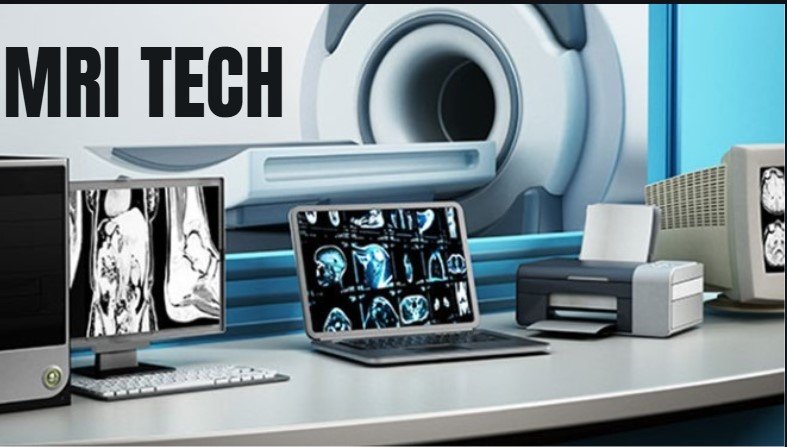
“MRI tech” stands for “magnetic resonance imaging technology.” It is a medical imaging method that helps doctors see the inside of the human body without surgery. MRI machines use strong magnets and radio waves to create detailed images of organs, muscles, bones, and tissues.
MRI technology is essential in modern healthcare. It helps doctors find diseases, injuries, and other health problems quickly and accurately.
How MRI Tech Works
When a patient lies inside the MRI scanner, the machine creates detailed pictures of different parts of the body.
Unlike X-rays, MRI tech does not use harmful radiation. The images produced by MRI scans help doctors understand what is happening inside the body and make better treatment decisions.
Also Read : vet tech salary
Importance of MRI Tech in Healthcare
MRI technology plays a major role in healthcare. Doctors use MRI scans to diagnose many conditions and monitor patient health.
Some common reasons for MRI scans include:
- Finding brain disorders
- Detecting spinal injuries
- Examining joints and muscles
- Checking heart conditions
- Identifying tumors and cancers
- Investigating internal organ problems
Because MRI tech images are highly detailed, doctors can often detect issues that other imaging methods may miss.
Duties of an MRI Tech
An MRI technologist is a trained healthcare professional who operates MRI equipment.
Common duties include:
- Preparing patients for MRI scans
- Operating MRI machines
- Monitoring patient safety
- Explaining procedures to patients
- Reviewing image quality
- Maintaining imaging equipment
- Following healthcare regulations
MRI must be skilled, careful, and patient-focused.
Skills Needed for MRI Tech Careers
People interested in MRI technology should develop several important skills.
Technical Skills
MRI technologists must understand imaging equipment and scanning procedures.
Communication Skills
They need to explain procedures clearly and help patients feel comfortable.
Attention to Detail MRI Tech
Small mistakes can affect image quality. Careful work is essential.
Problem-Solving Skills
Technologists may need to adjust scanning techniques to get better images.
Compassion MRI Tech
Many patients feel nervous during MRI scans. A caring attitude helps patients feel relaxed.
Benefits of MRI Technology
MRI technology offers many advantages in healthcare.
High-Quality Images
MRI scans provide detailed pictures of soft tissues, muscles, and organs.
No Radiation MRI Tech
Unlike some imaging methods, MRI does not use ionizing radiation.
Early Disease Detection
Doctors can identify health problems earlier, which often improves treatment outcomes.
Non-Invasive Procedure
Patients do not need surgery for doctors to examine internal structures.
Wide Range of Uses MRI Tech
MRI technology is useful for diagnosing many different medical conditions.
Challenges in MRI Technology
Although MRI technology has many benefits, there are also some challenges.
Long Scan Times
Some MRI scans can take 30 minutes or longer.
Patient Discomfort MRI Tech
The MRI machine can feel small and noisy, causing discomfort for some patients.
Metal Restrictions
Despite these challenges, MRI remains one of the most valuable diagnostic tools available.
Education Required for MRI Tech
Becoming an MRI technologist usually requires specialized education and training.
Students often complete:
- A medical imaging program
- MRI-specific training
- Clinical practice experience
- Professional certification requirements
Training programs teach anatomy, patient care, imaging procedures, and MRI safety standards.
Career Opportunities in MRI Tech
MRI offers excellent career opportunities. Hospitals, diagnostic centers, clinics, and medical imaging facilities regularly hire MRI.
Some career paths include:
- MRI Technologist
- Senior MRI Specialist
- Imaging Department Supervisor
- MRI Applications Specialist
- Healthcare Educator
As healthcare services continue to grow, demand for skilled MRI professionals is expected to remain strong.
Future of MRI Tech
MRI technology continues to improve every year. New developments are making scans faster, more comfortable, and more accurate.
Future advancements may include:
- Faster scanning systems
- Improved image quality
- Artificial intelligence integration
- Better patient comfort features
- Advanced disease detection methods
These innovations will help healthcare providers deliver even better patient care.
Conclusion
It helps doctors diagnose diseases, monitor treatment progress, and improve patient outcomes. MRI technologists play a vital role by operating advanced imaging equipment and ensuring patient safety. With growing healthcare needs and continuous technological improvements, MRI offers a promising future for both patients and healthcare professionals.
FAQs
- What does MRI stand for?
MRI stands for Magnetic Resonance Imaging.
- Is MRI safe?
Yes, MRI is generally safe because it does not use harmful radiation.
- How long does an MRI scan take?
Most MRI scans take between 15 and 60 minutes, depending on the body area being examined.
- Can MRI detect cancer?
Yes, MRI scans can help doctors detect and evaluate many types of cancer.
- Where do MRI technologists work?
They work in hospitals, clinics, diagnostic imaging centers, and healthcare facilities.